BLOG
September 18, 2025
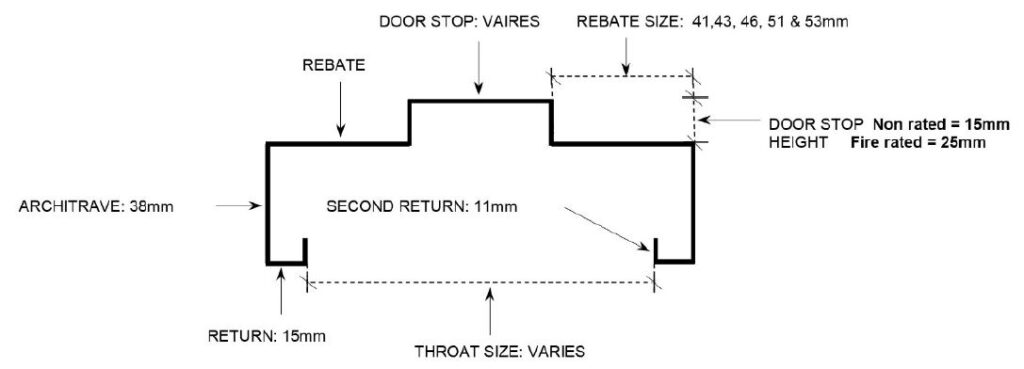
The foundation of a high-quality metal door frame starts with meticulous detailing. At this stage, our project managers thoroughly analyses architectural drawings, refining each profile to meet project specifications. Whether adapting pre-existing designs or developing custom profiles, this phase ensures seamless integration with surrounding structures.
Key Design Considerations:
Performance – Fire rating, acoustics, durability, and material selection.
Rebates – Section that allow doors to sit flush within the frame, enhancing security and fire resistance.
Function – Operation types such as swing, slide, or pivot.
Architraves (Face Trim) – Decorative outer edges that enhance aesthetics while concealing fixings.
Integration – Compatibility with walls, doors, and end-user requirements.
Once the detailing is finalized shop drawing are produced which are to be approved by the client. Once confirmed the design moves into the laser programming phase. Here, CAD software translates these specifications into precise cutting instructions, ensuring accuracy and consistency in fabrication.
With the detailed specifications ready, technical detailer, takes over in the laser programming phase. Using Computer-Assisted Design (CAD) software, he converts shop drawings into precise digital instructions that will direct the laser cutting process.
“It’s all about making sure the designs are not only precise but manufacturable. Every number and line in the drawing translates directly to the metal sheet.”
Matt Smith – Technical Detailer
Once programmed, these CAD-generated files are sent directly to the laser cutting software, eliminating the need for manual adjustments. The Yawei 6kW Fibre Optic Laser (Model YWL2040S), sourced from Applied Machinery, follows the programmed instructions to cut each frame component to exact specifications.
At this point, the laser cutting operator, steps in. Their role is to load the required metal sheets onto the laser exchange bed and start the cutting process. Since the machine is pre-programmed, they simply open the file and run the cutting operation, ensuring each profile is precisely cut.
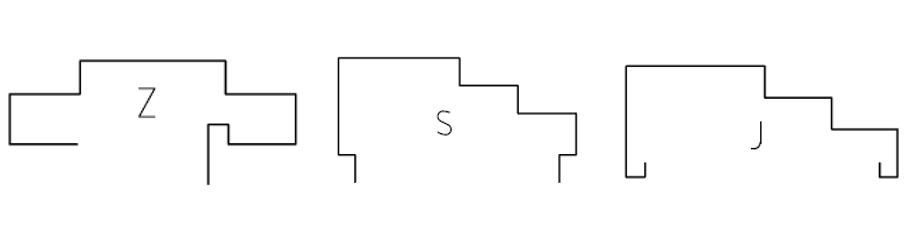
Thanks to the flexibility of this process, a wide range of profiles can be produced—from standard designs to intricate custom shapes, including tapered profiles and other unique specifications.
Click here to learn more about our frame customization options.
Press brake folding is a critical process in metal fabrication, requiring exact force distribution to achieve accurate, repeatable bends. The machine operates by pressing a metal sheet between a punch and die, shaping it into the desired profile. The success of this operation depends on several factors, including material properties, thickness, machine calibration, and operator expertise.
Different metals respond uniquely to pressure, requiring precise adjustments in tonnage and tooling selection to achieve optimal results. Even minor variations in sheet thickness and size can lead to defects, making precision an essential factor. In the fire door and frame industry, tolerances are exceptionally tight, where a deviation as small as 1.1mm can significantly impact fit, functionality, and compliance.
Regular machine calibration is essential to maintaining consistent force distribution, reducing errors that could weaken the structural integrity of the final product. Preventative maintenance not only extends the lifespan of machinery but also ensures that it continues to operate with the precision required for high-quality fabrication. Skilled operators are integral to this process, making precise adjustments to pressure settings, refining bending angles, and carefully positioning back gauges to achieve uniformity across every fold.
Additionally, metals have a natural tendency to revert to their original shape after bending, known as spring-back. Proper calculations and strategic over-bending techniques are essential to compensate for this effect, ensuring that the final angle remains within the required tolerance and meets industry standards.
Achieving precise bends is essential in fire door and frame manufacturing, where even minor variations can impact installation, sealing, and overall performance. A well-calibrated press brake, combined with skilled operation and rigorous quality control, ensures every component meets the exacting standards of the industry.
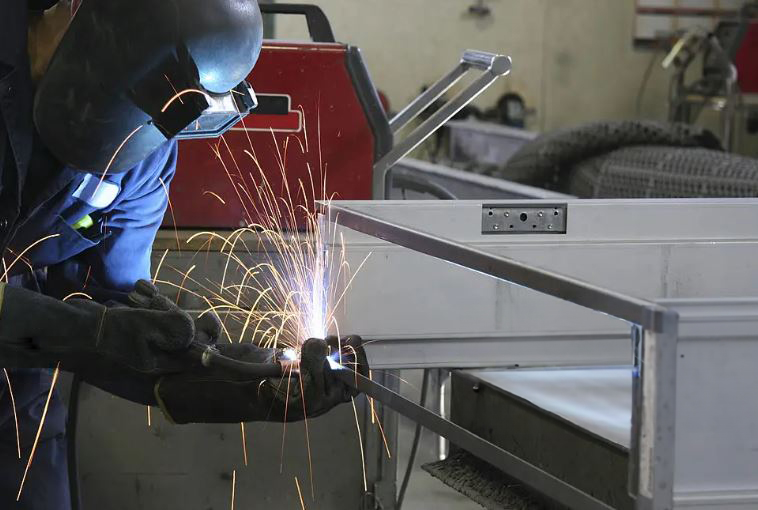
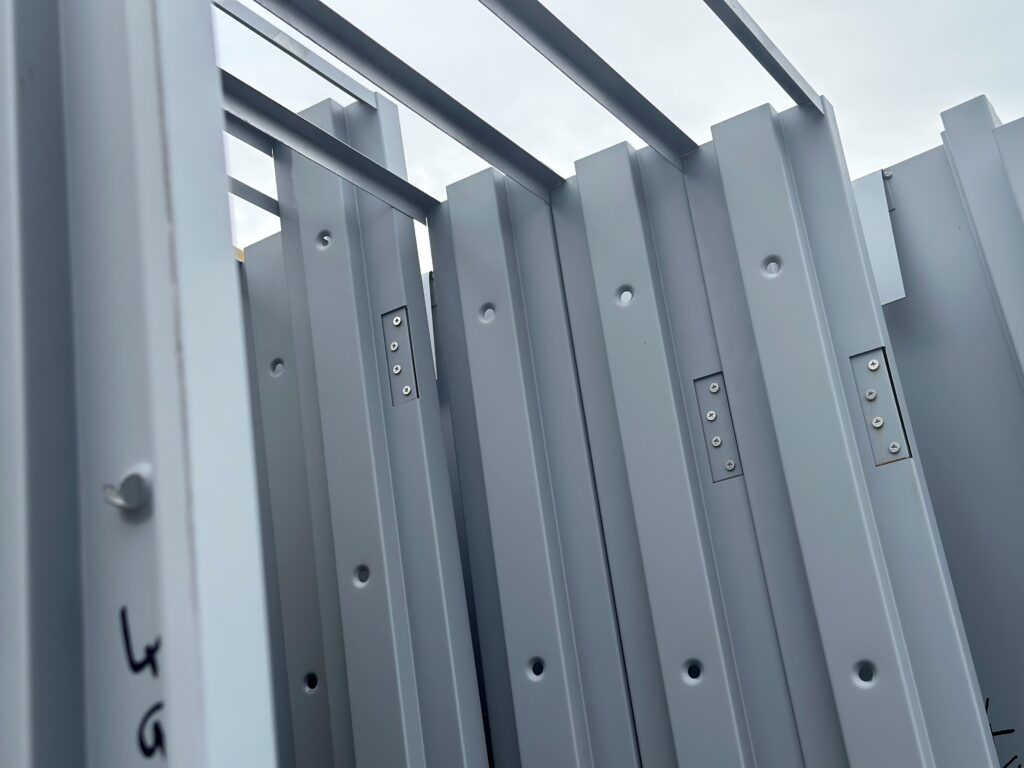
Once the metal has been cut and folded into shape, it’s time for welding. This stage is critical for structural strength, fire resistance, and overall durability.
Welding Techniques Used:
The Welding Process Step by Step:
For fire-rated door frames, additional steps are necessary to meet Australian Standards AS1905.1 and 1530.4. Fire-resistant frames are designed to withstand extreme heat and slow the spread of fire.
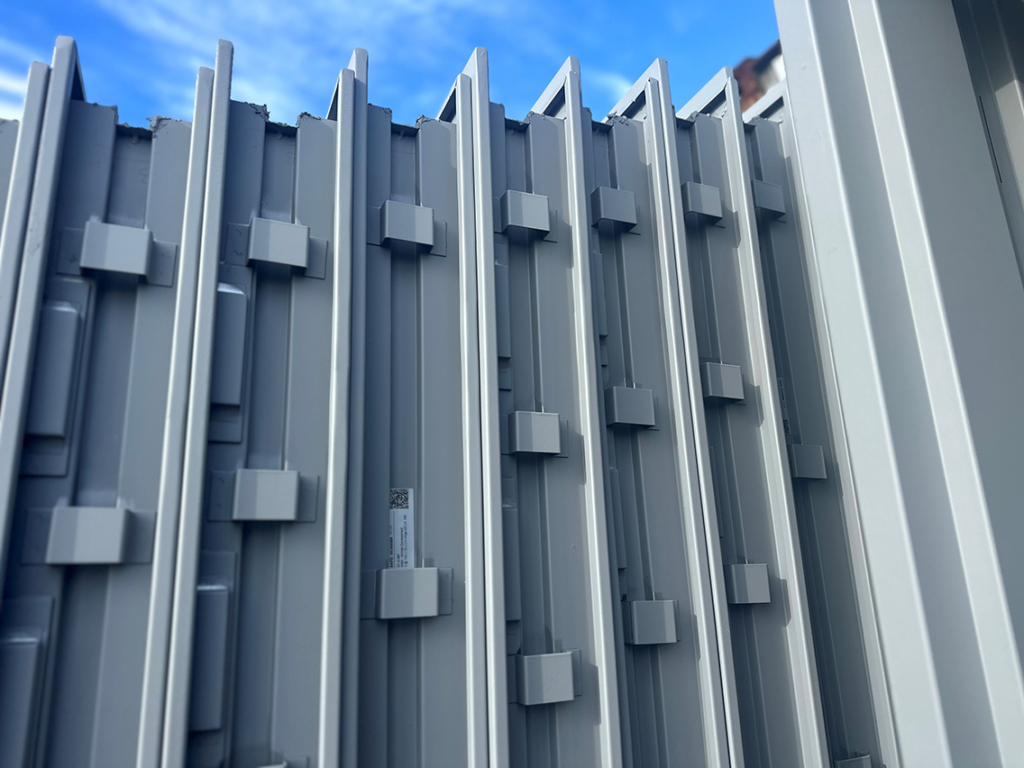
One key method used at AAFD is backfilling, which enhances both fire resistance and structural integrity. This process involves filling gaps within the frame with specialized fire-resistant materials, such as tested and approved mediums like plasterboard, vermitex, and mortar, in accordance with tested specimens. These materials help dissipate heat and regulate thermal transfer, ensuring the frame maintains its integrity during a fire.
In addition to improving fire resistance, backfilling is also used in Acoustic Door Sets to reduce vibrations and limit sound transmission between spaces.
After welding, metal frames undergo finishing processes to enhance durability, corrosion resistance, and aesthetics.
The first step is thorough cleaning to remove welding residues, oils, and oxidation. If additional corrosion resistance is required, the frames may be galvanized. The final step involves priming and, where specified, powder coating. A rust-inhibitive primer is applied to protect the metal surface, and if a powder-coated finish is required, a durable coating is applied for added protection and longevity.
Before any frame leaves the factory, it must pass rigorous quality control checks to ensure compliance with design and safety standards.
According to
“One small mistake in measurements or welding could compromise the entire frame, making this phase critical.”
Maroun Shoushani – Production Manager
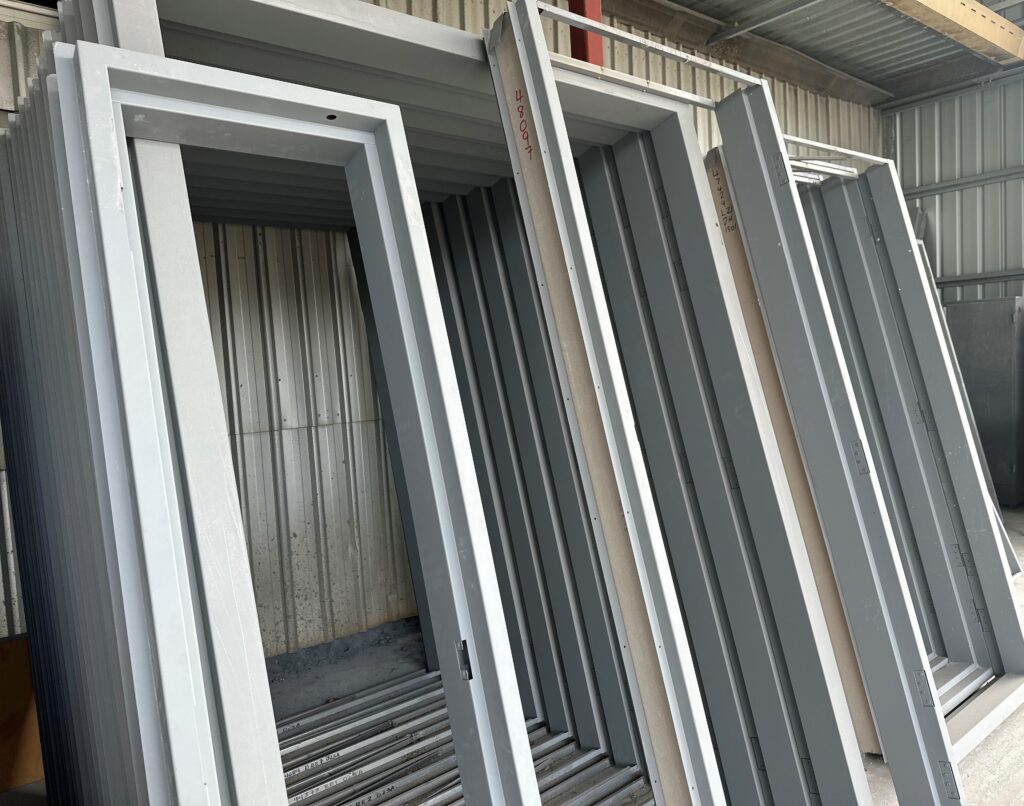
The manufacturing of metal door frames—especially fire-rated ones—demands precision at every stage. From CAD design and laser cutting to press brake folding, welding, backfilling, and finishing, each step must be executed with accuracy to ensure compliance with safety standards.
By combining advanced manufacturing techniques with skilled craftsmanship, the final product is a strong, durable, and fully compliant metal door frame that is built to last.
For further reading jump to:
Australian Architectural Fire Doors Pty Ltd
29 Andrew Campbell Dr
Narangba QLD 4504
© Copyright 2024. Australian Architectural Fire Doors Pty Ltd. All Rights Reserved.
